Upside Voices Report Published
Today, the Upside partnership publishes Upside Voices, bringing together the experiences of people supported by Scotland’s national voluntary throughcare service.

What can people’s experiences teach us about how Scotland’s justice and related services could work better?
Upside Voices brings together experiences and learning shared by people supported by Upside. They reflected on court, remand, prison, release and returning to the community and their accounts show how different services, decisions and personal circumstances can interact, where transitions can become more difficult and what helps people feel supported and able to move forward.
We are sharing this learning to encourage reflection, conversation and continued improvement across partners, while recognising the complex pressures facing services and staff throughout Scotland.
Over the past week, we have explored six themes from #UpsideVoices ahead of publication of the full report:
intervening earlier
creating safety, clarity and trust
understanding the consequences of remand
maintaining continuity across services
preparing properly for release
showing what good throughcare can achieve
Intervening earlier
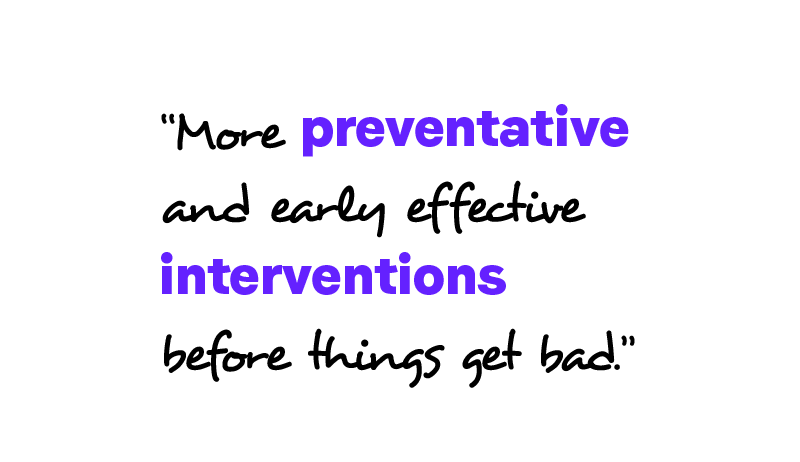
People taking part in Upside Voices often linked their justice involvement to longstanding unmet needs, including trauma, housing instability, mental health difficulties and problems accessing recovery support.
Many had already been in contact with services before a crisis developed. Their accounts showed how the timing, continuity and coordination of support did not always match what they needed, particularly when housing problems, poor mental health, financial pressure and substance use overlapped and intensified.
Participants described greater stability when support was accessible at the point they needed it, relationships were trusted and practical help arrived before situations escalated.
Effective earlier intervention can involve recognising several connected needs at once, making a warm handover, sharing relevant information and allowing enough time for trust to develop. A housing or health problem may also be a point at which broader support can help prevent circumstances from escalating into a justice response.
People come into contact with housing, health, recovery and other services at different points in their lives. Their experiences show the value of connecting those opportunities and sustaining support across services, while recognising the pressures involved in responding early to complex and changing circumstances.
Creating safety, clarity and trust

People taking part in Upside Voices described how uncertainty could intensify anxiety when they were already managing trauma, housing insecurity or mental health difficulties.
Court proceedings, prison transfers, changes to medication and release arrangements could affect several parts of someone’s life at the same time. Clear explanations, predictable processes and respectful communication helped people feel safer and more able to engage.
Clear and respectful communication is one expression of trauma-responsive practice. In the situations participants described, this included explaining what would happen next, checking that information had been understood, avoiding unnecessary repetition of painful experiences and offering as much choice and control as circumstances allowed. When arrangements changed, prompt communication helped reduce fear and allowed people to make practical decisions.
Participants also valued relationships that remained reliable when they were distressed, disengaged or unsure about accepting help. Consistency gave people a clearer sense of who would support them and made it easier to ask for help before problems escalated.
Their experiences offer practical learning for services operating under considerable pressure. They show how trauma-responsive principles can inform everyday interactions, procedures, environments, handovers, workforce support and coordination across services. When these elements reinforce one another, people are more likely to experience support as safe, consistent and responsive.
Understand the consequences of remand

People taking part in Upside Voices consistently described remand as one of the most damaging stages of their justice journey. Their experiences reinforce why it should be a measure of last resort, used only when no safe and appropriate alternative is available.
While in prison waiting for their cases to be resolved, participants described losing accommodation, employment, income and contact with established support in the community. They also spoke about difficulties accessing healthcare, education, work and recovery programmes within prison, with prolonged uncertainty and inactivity affecting their mental health and motivation.
Those pressures could continue after release. People leaving remand are not eligible for a liberation grant, and participants described returning to the community with housing, belongings and other practical arrangements still unresolved. Even a short period in custody could therefore leave people with greater instability and fewer of the protective factors that had previously supported them.
The effects of remand are shaped by decisions and arrangements across several parts of the system. Timely information for courts and access to supported community alternatives can help avoid remand where these are safe and appropriate. When remand cannot be avoided, efforts to maintain healthcare, medication, family contact and links with established services, provide access to purposeful activity and recovery support, and begin release planning early can help reduce disruption.
Delivering this consistently is especially challenging while prisons and healthcare teams are managing significant population and operational pressures. Participants’ experiences show how these conditions can affect people on remand and offer practical learning about how disruption might be reduced and continuity of support protected.
Maintain continuity across services

Having to start again was a recurring experience for people taking part in Upside Voices.
Changes in location or circumstances could disrupt the support people were receiving. Within custody, a transfer between prisons could affect access to healthcare, medication, education, programmes and family contact. Participants described returning to waiting lists, explaining their circumstances again and rebuilding relationships with workers.
Prison transfers take place for a range of reasons, often across an estate facing significant population and operational pressures. These conditions can make continuity difficult to maintain. Where essential information, care arrangements and existing plans can be shared promptly, this can help reduce disruption and protect progress already made.
Returning to the community could involve another change in services and relationships. Participants described needing to reconnect with healthcare, recovery support, family and other services that had been interrupted during their time in custody.
Upside workers can provide some continuity through this transition. By building a relationship before release and remaining involved afterwards, they can help people understand what is happening, reconnect with services and raise concerns when information or arrangements have not carried across into the community.
Participants’ experiences show the value of clear handovers, shared information and clarity about who is providing support at each stage. Continuity can give people a more stable foundation, allowing them to build on progress already made rather than repeatedly having to begin again.
Prepare properly for release

People taking part in Upside Voices described liberation as one of the most fragile points in their justice journey.
Imprisonment could disrupt accommodation, income, employment, family relationships, healthcare and contact with community services. As release approached, people could be trying to rebuild these connections while also making immediate arrangements for somewhere to stay, money, identification, transport, medication, personal belongings and appointments.
Friday release, liberation directly from court and long journeys in rural areas could make these arrangements more difficult. Participants described how gaps in one area could affect others, increasing the risk of missed appointments, homelessness, relapse or loss of contact with support.
People felt more confident when preparation began early, they were involved in the decisions being made and a trusted worker was available before and after liberation. Release planning works best when the relevant services can come together around the person with enough time to identify risks, resolve practical problems and agree who will provide support once they return to the community.
The Scottish Government is developing National Throughcare Standards intended to help services work together more consistently across the release pathway and ensure that the transition to the community is supported by the services each person needs. Alongside wider work on release planning and homelessness prevention, this creates an opportunity to make earlier and more coordinated preparation the norm.
Shared timescales, clear responsibilities, timely information and the involvement of third-sector organisations already supporting the person can help partners coordinate around the same plan. Upside is part of this wider pathway. Throughcare workers can begin building a relationship before liberation, help people take part in planning and provide a consistent point of contact as arrangements are put into practice after release.
By liberation day, good preparation means that someone knows where they will stay, how they will travel, how they will access medication and money, which appointments have been confirmed and who they can contact if an arrangement changes or falls through.
Show what good throughcare can achieve

Participants valued workers who were accessible, reliable, persistent and non-judgemental. They described feeling listened to and believed, and knowing support would continue through setbacks and periods of crisis.
Throughcare helped people navigate appointments, housing, healthcare and benefits, resolve practical barriers and rebuild routines after release. Its impact came from practical assistance and the trusted relationships through which that support was delivered.
People also valued advocacy. Workers helped them understand processes, communicate with services and keep plans moving when they felt overwhelmed or when arrangements changed or did not work as expected.
The report shows how throughcare is strengthened when housing, health, justice and community services connect at the points where stability is most fragile. Throughcare workers can bridge services and maintain a trusted relationship, while progress is also supported by access to accommodation, healthcare, income and community support at the right time.
As Scotland develops National Throughcare Standards and strengthens release planning, Upside Voices offers practical learning that can support this work: begin early, explain clearly, maintain continuity, address immediate barriers and keep offering support when circumstances change.
The report also demonstrates the value of continuing to listen to people receiving support. Participants’ accounts show what they valued most about throughcare and offer practical learning for its future development. Their experiences show how practical help, persistent support and trusted relationships can combine to give people greater stability as they rebuild their lives after prison.